The Creswick Mine Disaster

admin • December 1, 2025

On 12th December 1882, Creswick became the location of a mining disaster which holds, to this day, the record for the deadliest mine disaster in Australia’s history.


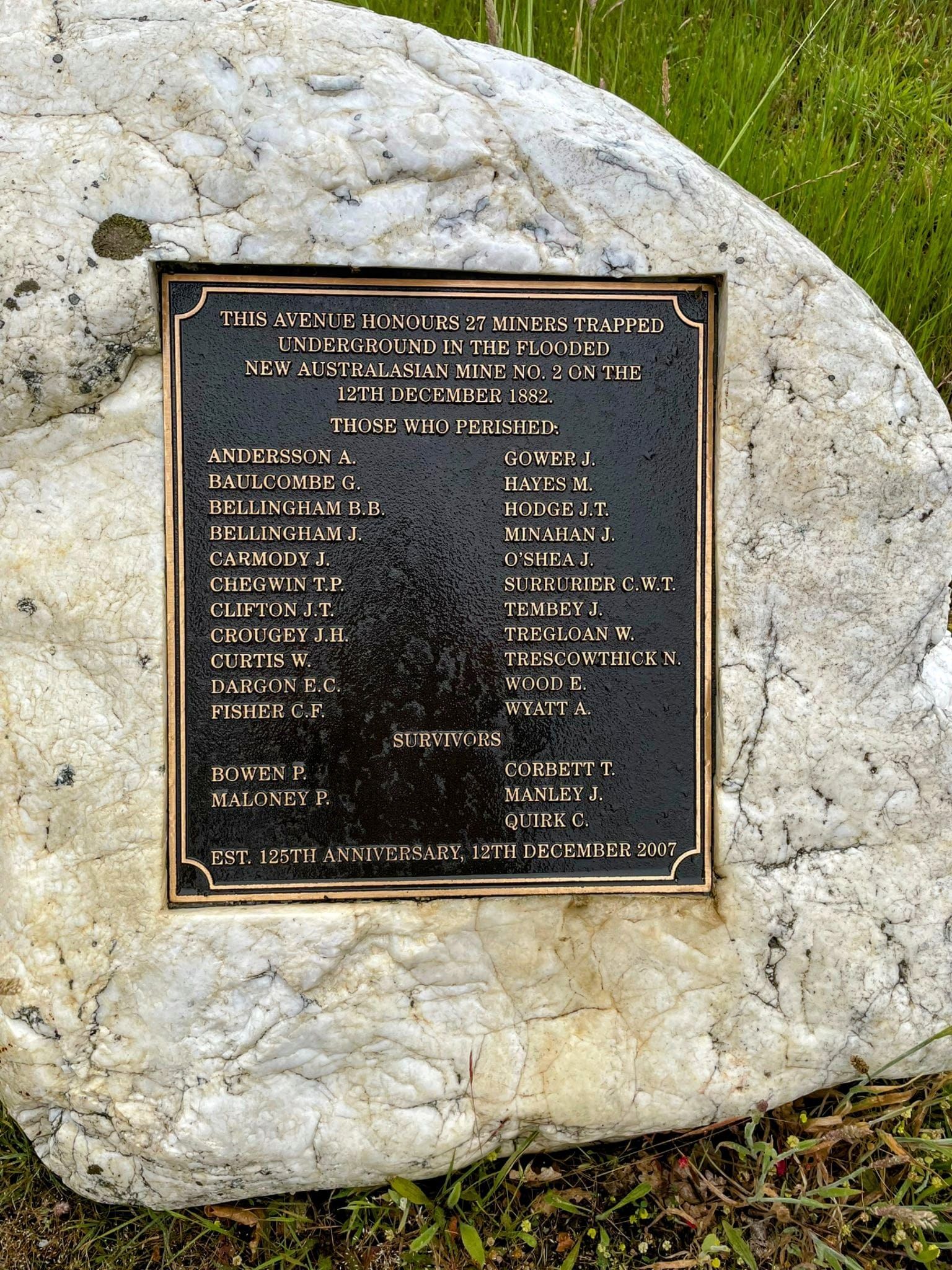
There were 41 men who were on shift on the night of the 11th December working in the New Australasian No.2 Gold Mine. They descended 250 feet (76m) from the surface and then made their way a further 2000 feet (600m) to the face where they were mining. It was at 5.30am the next morning when a working shaft came too close to an older flooded parallel shaft – resulting in water flooding into the newer working part of the mine. 27 miners became trapped, but were able to reach a small air pocket in a space known as the No.11 jump-up. Here they stayed trapped for 2-3 days. They wrote messages on their crib pails to their families and sang together and prayed.


The rescue mission involved 2 days of frantic pumping of the floodwaters and Navy divers hurried from the ship HMVS Cerberus to help. By the time they were reached, after 3 days, 22 men had succumbed to the rising water levels and drowned. Only 5 of the 27 made it out alive.


When the funeral was held, there were many thousands in attendance – 400 people marched in the procession and another 15,000 onlookers lined the streets. 


At this time there was no such thing as workers compensation to help the 18 wives and 63 children who were left behind. So, the community set up a relief fund to assist the families. This would be the birth of workers compensation in Australia.


The Creswick Mine Disaster highlighted the need for better safety regulations in mining operations. It would remain the largest loss of life in a workplace incident in Australia for nearly 90 years, when The West Gate Bridge Collapsed in 1970.


For more information on the Creswick Mining Disaster Australasian Mining Disaster | Creswick Museum


List of the Dead

  • Christian Frederick Fisher (55) Wittenburg, Germany
  • James Carmoody (53) County Clare, Ireland
  • George Baulcomb (52 & 10 months) Maidstone, Kent, England
  • Nathaniel Trescowthick (45) Cornwall, England
  • Michael Hayes (45) Ireland
  • John Gower (44) Lyminge, Kent, England
  • William Curtis (42) Gwennap, Cornwall, England
  • James Minahan (38) County Clare, Ireland
  • William Tregloan (37 & 6 months) Marazion, Cornwall
  • Edward Campon Dargon (36) Kilkenny, Ireland
  • Anton Andersson (36) Christianstada, Finland
  • John Henry Crougey(35) Stithians, Cornwall, England
  • James Mitchell Temby (35) Redruth, Cornwall, England
  • James O’Shea also known as James Walsh (34years & 11 months) County Waterford, Ireland
  • Carl Waldemar Theodor Serrurier (34) Berlin, Prussia
  • Thomas Penbertha Chegwin (31) Redruth, Cornwall, Ireland
  • Abraham Wyatt (31) Adelaide, South Australia
  • Jabez Bellingham (28) Worcestershire England
  • Benjamin Bowen Bellingham (21) Happy Valley, Victoria.
  • John Tom Clifton (27) Gainsborough, Lincolnshire, England
  • Edward Wood (26) Oldham, Lancashire, England
  • John Thomas Hodge (18) Creswick

Survivors

  • Peter Maloney
  • John Manley died 25/1/1924
  • Tom Corbett died 31/5/1935 Creswick
  • Cornelius Quirk died Feb. 1922 Milawa
  • Patrick Bowen  died 26/3/1909 Creswick

By admin January 12, 2026
The Granville rail disaster occurred on 18 January 1977 and remains the deadliest rail incident in Australian history. It resulted in the death of 84 people and injured a further 213. The train left the Blue Mountains at 6:09 on 18 th January 1977 and by the time it reached Sydney there were at least 469 passengers on board. At 8:10 the train derailed on a curve in a deep cutting at Granville and it hit the supports of the Bold St Bridge. This resulted in the bridge collapsing onto the train carriages and the passengers inside. The result was catastrophic loss of life and vast numbers of injuries, with many passengers and rescuers suffering from ongoing trauma. The train crash would expose inadequacies in the NSW railway maintenance processes, oversight and emergency response preparedness. The inquest and reviews into the incident became controversial in that there were allegations that the process was unduly influenced. Despite this it was clear that there were many opportunities for prevention of future railway disasters. There has been extensive criticism of the management and oversight both before and after the disaster.  There is much that is concerning about this case, including the support of those injured and bereaved in the incident. The failure to act following previous incidents on the track is particularly disturbing. There had been two previous derailments on the same section of track, resulting in trains hitting the Bold St Bridge. One in 1967 and another in 1975. Had the issue been addressed on either of these occasions, perhaps the disaster in 1877 would have been avoided. This highlights the importance of investigating incidents and ‘near misses’ and acting to resolve safety issues at the earliest opportunity. 40 years after the disaster, in 2017, the Premier of NSW delivered a belated official apology on behalf of the Government: Granville: Mixed response as NSW Government apologises for Australia's worst train disaster - ABC News An award winning docu-drama named “The Day Of The Roses” was produced as a dramatic depiction of the events surrounding the Granville train crash. It can be found here: https://youtu.be/ZkFBfQA9oxg?si=g_ePZ0kn0KpFrLLE . Those interested in incident investigation, prevention and related matters may well find it thought-provoking.
By admin December 15, 2025
Snakes are a natural part of the Australian environment, but when they enter worksites, they can pose significant risks. Snakes are most commonly encountered in industries such as construction and agriculture, but snakes can appear in any workplace – including in offices, warehouses, outdoor work areas, or storage spaces. Warm weather increases snake activity, making encounters more likely during summer months. The danger presented by snakes is very real, as snakebites can cause serious injury or death. Common Risk Factors There are certain workplace conditions which increase the likelihood of snakes appearing: Vacant sites : Snakes often move into quiet areas during holiday breaks or weekends. Shelter opportunities : Stored materials, rubble, sheds, and equipment provide dark, cool hiding spots. Food sources : Mice, frogs, and other small animals attract snakes to worksites. Hot weather : Snakes become bolder and more active in summer. Prevention Strategies As always, employers are required to reduce risks to health and safety in the workplace. They can do this by adopting proactive measures: Site housekeeping : Remove rubbish, debris, and unused materials where snakes could hide. Control food sources : Limit rodent and frog populations by managing waste and water. Protective gear : Wear gloves, boots and long pants when working outside or handling stored materials. Awareness training : Inform workers about snake risks, especially after site closures or during hot weather. First Aid training: ensure staff are trained in the initial response in the case of a bite. If a snake is seen in the workplace One of the most important safety messages is never provoke a snake. Most bites occur when people attempt to attack or handle snakes. If a snake is sighted: Stop work in the area immediately. Report the sighting to supervisors. Contact local authorities or licensed snake catchers to remove the hazard. First Aid for Snake Bites Your workplace should have a trained First Aider. The initial first aid for a bite should include: Lie the person down and keep them still. Applying a broad, firm bandage around the bitten limb, about as tightly as for a sprained ankle. Bandage over the bite site first and then bandage as much of the limb as possible, starting from below upwards. Keep the victim still and calm and splint the limb if possible. Do not cut, wash, or apply a tourniquet to the bite. Access immediate medical care - dial 000. Don’t forget that you will need to complete an incident report after a snake bite has occurred. Then, your risk management follow up processes should be followed. A snake bite may be classified as a notifiable incident, in which case it must be reported to WorkSafe Victoria – call 13 23 60 . Conclusion Snakes are a real workplace hazard , especially in construction, agriculture, and outdoor industries. If your workplace is high risk for snakes then you are required to control the risk of snake bite. Prevention and awareness are the best defence: keep sites clean, reduce food sources, and train workers. Never provoke a snake —leave removal to professionals. First aid knowledge can save lives in the event of a bite. By treating snakes as a legitimate occupational hazard, workplaces can protect their workers from a potentially fatal hazard. For more information, see the following resources: Snakes at work: why you should never handle one yourself | WorkSafe.qld.gov.au Snakes on sites - OHS Reps Notifiable incidents under the Occupational Health and Safety Act 2004 | WorkSafe Victoria https://stjohn.org.au/app/uploads/2025/08/Fact-sheets_snake-bite.pdf